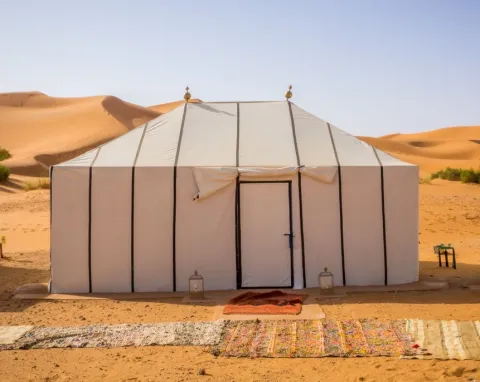
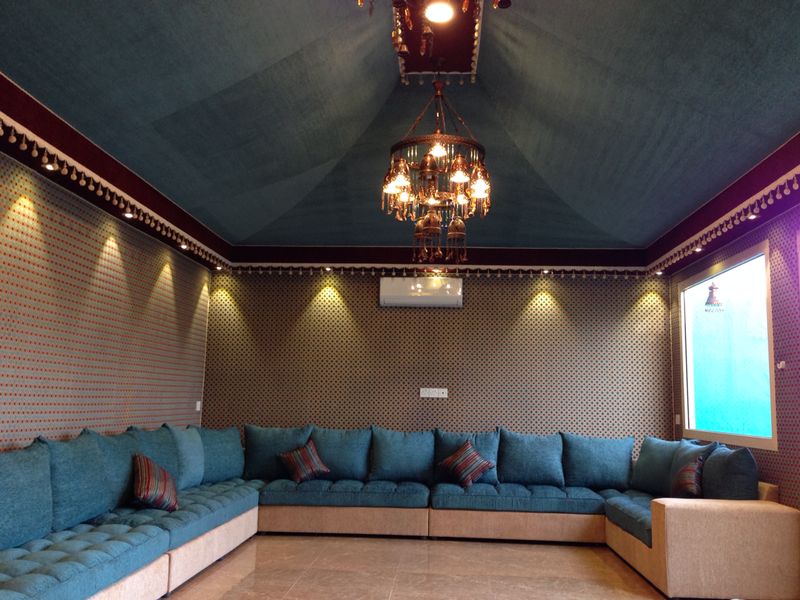
Walk into a well-appointed Arabic tent and you sense immediately that you are entering a considered space. Nothing about it is accidental. The layered carpets, the low seating along the perimeter, the fabric swags overhead, the oud smoke rising from a brazier in the corner: each element carries meaning that precedes any individual design decision by centuries.
Understanding why Arabic interior design commands such care inside a tent requires understanding the role of the tent itself in Arab cultural life. This guide covers that cultural foundation, the five classic elements of Arabic tent interior design, how colour changes with the occasion, and why UAE hosts increasingly turn to professional interior packages rather than assembling these spaces themselves.
The Cultural Role of the Tent Interior in Arab Life
The tent is not simply shelter in the Arabic tradition. It is a declaration. In the nomadic and semi-nomadic societies from which Gulf culture descends, a tent was the full expression of a household: its wealth, its taste, its standing in the community and its capacity to receive guests. A man was known by his tent as much as by his lineage.
That attitude has not disappeared with urbanisation. It has transferred into how the tent is used today: as an extension of the home for special occasions, as a seasonal structure for Ramadan, as a formal reception space for weddings and national celebrations. The tent carries the same social weight it always did. Its interior, therefore, carries the same expectations.
Guests who enter an Arabic tent are making a judgment, whether consciously or not, about the host. A poorly appointed interior communicates carelessness. A thoughtfully layered space communicates the same values the tent always communicated: generosity, refinement and pride in one is identity.
The Diwan and Majlis Concept: The Tent as Social Architecture
The diwan, or majlis, is one of the defining institutions of Arabic social life. It is a dedicated space (historically a room in the house, now often a separate structure or an outdoor tent) set aside for receiving guests, discussing community matters, conducting business and marking life events.
The rules of the majlis are clear even when unspoken. Guests enter and are welcomed at the door. Seating is arranged so that all can see and speak to all. No one is placed with their back to the door. The host is positioned to receive newcomers. Arabic coffee and dates are served without being requested, because hospitality is a duty rather than an option.
When the tent extends the majlis into an outdoor or seasonal space, it inherits all of these rules. The tent is not a party shelter where people mill about informally. It is a structured social environment. Its interior design must honour that structure: seating along the perimeter, a clear reception axis, proper ceiling height to convey dignity, and lighting that creates warmth without harshness.
Modern UAE hosts frequently use Arabic tents for Ramadan iftar gatherings, wedding receptions, engagement celebrations, national day events and VIP corporate entertainment. In each case, the tent interior carries the full cultural weight of the majlis. The design is not cosmetic. It is functional in the deepest social sense.
The Five Classic Elements of Arabic Tent Interior Design
1. Floor Covering: Layered Carpets
The floor of an Arabic tent interior is never bare. It is built in layers, each layer adding visual depth and physical comfort for guests who may sit cross-legged or recline.
The base layer is typically a tribal kilim, a flat-woven rug with geometric patterns in earthy tones. Its primary function is to cover the ground surface and provide a neutral foundation. Above it goes a Persian-style runner along the central axis, introducing the colour palette and directing movement through the space. The top layer is the velvet majlis carpet: a thick, pile carpet in a deep colour (burgundy, navy, forest green or gold) that defines the sitting areas along the perimeter.
The layered approach serves a practical purpose as well as an aesthetic one. Air circulates between the layers, reducing the heat that a single thick carpet would trap. The multiple surfaces also absorb sound, giving the interior the quiet, enclosed quality that makes conversation intimate even in a large tent.
2. Seating: The Perimeter Arrangement
Arabic tent seating is organised around the perimeter of the space rather than around a central table. This is not a style preference. It is the spatial expression of the majlis principle: everyone faces inward, everyone is visible, no one is excluded from the conversation.
Three types of seating elements combine to create the perimeter arrangement. Floor cushions (mukhaddas) are placed directly on the velvet carpet in three sizes: a large bolster against the wall, a medium seat cushion in front of it, and a smaller accent cushion for armrest and posture support. Low-back bolsters run along the full perimeter, creating a continuous seating surface from which guests can extend their legs or shift position easily. At the primary reception point, usually facing the entrance, a high-back Arabic sofa serves as the host seat, distinguishing the position of the host without creating a barrier between host and guests.
Fabric choices for seating follow the occasion palette: gold and burgundy brocade for formal events, cream and ivory damask for weddings, navy and charcoal velvet for corporate majlis settings.
3. Ceiling Treatment: The Fabric Canopy
The ceiling of an Arabic tent interior is the element that most dramatically transforms the experience of the space. A bare tent ceiling (visible frame poles and plain fabric) reads as functional. A treated ceiling reads as a room.
The standard treatment is fabric swags or a pleated liner. Swags are lengths of fabric gathered at intervals along the ridge and draped down toward the side walls, creating a scalloped profile that fills the visual field overhead. A pleated liner is a full ceiling panel, usually in white or cream fabric, stretched taut between the frame poles to create a smooth, lowered ceiling effect that conceals the structure entirely.
Both approaches do the same thing: they create a sense of height and enclosure simultaneously. The ceiling appears to push upward at the centre while drawing inward at the edges, making the tent feel both grand and intimate. Gold or champagne trim along the swag edges adds formality appropriate for weddings and VIP events. Plain white liner reads as clean and contemporary for corporate settings.
4. Lighting: Lanterns, Strings and Spots
Lighting in an Arabic tent interior is layered in the same way as the floor. Ambient, accent and task light each contribute to the overall effect, and the sources are chosen to reinforce the cultural character of the space.
Arabic lanterns, known as fanoos, are the defining light source. In brass or iron, they are suspended from the frame at intervals across the ceiling, casting a warm, directional light with a patterned shadow that covers the tent walls and ceiling in a lattice of geometric shapes. Brass fanoos suit formal and Ramadan settings. Iron with coloured glass panels works for more intimate wedding atmospheres.
String lights along the ridge line provide the base layer of ambient light: a warm, even glow that fills the space without creating harsh shadows. They are not a primary source but a background one, ensuring no corner of the tent falls into darkness.
LED spotlights mounted on the frame poles are aimed at decorative panels, the host seating area and floral or decorative centrepieces. They bring the eye to the points of visual interest and create the foreground-background contrast that gives a well-lit interior its sense of depth.
5. Decorative Panels and Dividers
The fifth element operates as both structure and ornament. Decorative panels define zones within the tent, create visual rhythm along the walls and introduce the cultural motifs that signal the Arabic character of the space.
Mashrabiya-pattern laser-cut panels are the most widely used. The geometric lattice pattern is instantly recognisable as Arabic architecture and works in wood, MDF, metal or acrylic. Suspended from the frame or mounted on lightweight stands, they create semi-transparent screens between seating zones without blocking the circulation of air or light.
Embroidered fabric dividers serve a similar function with a softer character. Used between tent bays or as backdrop panels behind the host seating, they add texture and colour in a way that complements the fabric elements of the floor and ceiling.
Framed Quranic calligraphy (printed on canvas, carved in wood or cast in metal) completes the cultural register of the space. Placed on the back wall behind the host seat or at the tent entrance, calligraphy marks the space as one governed by values rather than simply decorated for pleasure.
Colour Palettes by Occasion
The colour choices in an Arabic tent interior are not arbitrary. Each occasion in Arab cultural life carries an established visual vocabulary, and departing from it reads as a failure of cultural awareness rather than a design statement.
Ramadan Iftar and Evening Gatherings
The Ramadan palette is rich and warm: burgundy, deep gold, cream and amber. Lighting sits on the warm end of the spectrum. The overall effect should feel enveloping and generous, a visual expression of the abundance of the iftar table after a day of fasting. Brass lanterns, gold-trimmed swags and burgundy velvet seating are the dominant elements.
Wedding Reception Tents
Wedding interiors in the UAE favour white, champagne, blush and soft gold. The ceiling treatment is typically the most elaborate: full pleated liner in ivory with swag borders in champagne organza, a crystal chandelier centrepiece suspended from the ridge, and spot-lit floral arrangements at the entrance and behind the host area. The palette is intentionally pale and light-reflecting to photograph well and to create a sense of occasion distinct from everyday life.
Corporate Arabic Majlis
The corporate Arabic majlis combines two visual languages: the traditional structural arrangement of the majlis (perimeter seating, host position, welcoming entrance) with the restrained palette of professional hospitality. Navy, charcoal, warm grey and gold accents define this setting. No floral excess, no elaborate swags. The ceiling may be a clean white liner with discreet spot lighting. The message is understated luxury: competence and refinement without ostentation.
Traditional and Tribal Events
Heritage events (national day celebrations, camel festival tents, falconry gatherings, Bedouin-theme corporate entertainment) use an earthy palette: terracotta, sandy beige, burnt orange, deep brown and brick red. The Sadu geometric pattern, woven in the traditional black, white and brick red combination, appears on cushion covers, carpet borders and wall hangings. The aesthetic is rooted rather than polished, and the restraint of the palette itself communicates cultural authenticity.
How to Layer an Arabic Tent Interior
The correct sequence for setting up an Arabic tent interior is determined by practical logic as much as design logic. Each layer depends on the one below it being fixed and level before it is installed.
- Floor first: Lay the base kilim across the full tent floor, ensuring it is flat and even. Add the runner along the central axis. Bring in and position the velvet majlis carpet sections, overlapping the runner edges.
- Perimeter seating: Place the wall bolsters against the tent side walls on top of the velvet carpet. Position the seat cushions in front. Set the host sofa at the primary position. Adjust all seating so the perimeter line is consistent.
- Ceiling liner: Install the pleated liner or attach the swag fabric to the frame poles before the lighting is rigged. It is significantly harder to hang ceiling fabric around existing cables and fixtures.
- Lighting: Rig the string lights along the ridge. Hang the fanoos at planned intervals. Mount the spotlights on the frame poles and aim them at the intended focal points.
- Decorative accents: Position the Mashrabiya panels or fabric dividers. Hang or place calligraphy frames. Arrange any floral or centrepiece elements last, as they are the most fragile and most visible parts of the setup.
Following this sequence avoids the most common installation problem: having to dismantle completed layers to access the ones below.
The Scent Layer: Oud and Bakhoor
No guide to Arabic tent interior design is complete without addressing scent. Oud burners and bakhoor braziers are not decorative afterthoughts in an Arabic hospitality context. They are integral to the experience in the same way that lighting and seating are integral.
Oud, agarwood resin, is burned on charcoal in a metal or ceramic burner placed in the centre of the majlis or near the entrance. The smoke carries the scent through the space and, in the Arabic tradition, is passed around to guests who hold their garments over it to absorb the fragrance. Bakhoor (incense blends including oud, amber, rose water and other aromatics pressed into chips or blocks) is burned in a similar manner but with a lighter, more floral profile suited to mixed gatherings.
The scent of oud and bakhoor is a cultural signal as distinctive as the visual arrangement of the space. Guests who enter an Arabic tent and smell it know immediately that they are in a properly appointed environment. Guests who do not smell it notice the absence even if they could not name what is missing. For events where cultural authenticity matters, the scent layer is not optional.
Why UAE Hosts Prefer Professional Interior Tent Packages
The complexity of a properly layered Arabic tent interior is significant. The individual elements are manageable in isolation. Bringing them together at the correct quality level, in the correct sequence, with the correct proportions for the specific tent size and occasion requires experience that most private hosts do not have and do not need to develop.
Beyond the aesthetic challenge, there are practical and regulatory reasons to use professional installation for enclosed tent interiors in the UAE:
- Fabric quality and tensioning: A ceiling liner that is not tensioned correctly sags, collects condensation and looks unprofessional. Professional installers use the correct tensioning hardware and know how much give each fabric type requires.
- Fire-retardant liners: UAE civil defence regulations require that fabric used in enclosed public or semi-public spaces meets fire-retardant standards. Professional interior packages use certified FR-rated fabric for all ceiling and wall elements. DIY sourced fabric from retail outlets is rarely certified for this purpose.
- Load distribution: Suspended lighting, fan systems and decorative panels add load to the tent frame. Professional installers calculate load distribution and rig suspension points correctly. Incorrect rigging can stress frame joints and in extreme cases cause localised collapse of the frame under unexpected load.
- Setup and breakdown speed: Professional crews can set up a complete interior for a 10x15m tent in eight to twelve hours. An inexperienced team working without a clear sequence plan may take three to four times as long and still produce an inferior result.
Arab Muzalat Interior Tent Packages
Arab Muzalat supplies and installs Arabic tent interior packages across all seven emirates. Three tiers are available to suit different budgets and occasion types:
- Classic Package: Layered carpet floor, standard perimeter cushion seating, white pleated ceiling liner, string lights and basic fanoos. Suitable for Ramadan iftars, private family events and farm gatherings. Available for tents from 6x6m to 10x10m.
- Premium Package: All Classic elements plus embroidered bolsters and host sofa, swag ceiling treatment with trim, brass fanoos with string accent lights, Mashrabiya panel screens and two bakhoor braziers. Suitable for weddings, engagement events and corporate majlis. Available for tents from 8x12m upward.
- Royal Package: Full custom specification. Crystal chandelier centrepiece, custom calligraphy frame, full Sadu or embroidered wall hangings, premium velvet seating in client-specified colours, triple-layer ceiling treatment and dedicated scent service with oud burner attendant. Available for any tent size. Lead time and final specification agreed at quotation stage.
All packages include delivery, installation and breakdown. FR-certified fabric is standard across all tiers. Installation crews are available across Dubai, Abu Dhabi, Sharjah, Ajman, Ras Al Khaimah, Fujairah and Umm Al Quwain.
See Our Interior Tent Packages
Contact Arab Muzalat by WhatsApp or phone to discuss your interior tent requirements. Tell us your tent size, the occasion, your guest count and your preferred colour palette, and we will prepare a detailed quotation covering the package tier, full item list, installation timeline and total cost. No obligation. We are happy to walk through options with you before any commitment is made.